Excerpt of The Fruitless Crown of Macbeth: An Analysis
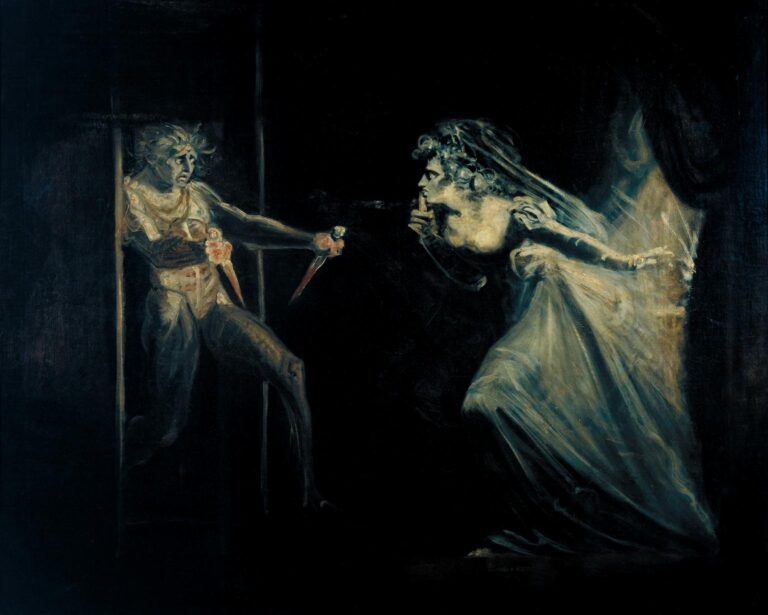
“To be thus is nothing,
But to be safely thus. Our fears in Banquo
Stick deep; and in his royalty of nature
Reigns that which would be fear’d: ’tis much he dares;
And, to that dauntless temper of his mind,
He hath a wisdom that doth guide his valour
To act in safety. There is none but he
Whose being I do fear: and, under him,
My Genius is rebuk’d; as, it is said,
Mark Antony’s was by Caesar. He chid the sisters
When first they put the name of king upon me,
And bade them speak to him: then prophet-like
They hail’d him father to a line of kings:
Upon my head they plac’d a fruitless crown,
And put a barren sceptre in my gripe,
Thence to be wrench’d with an unlineal hand,
No son of mine succeeding. If ‘t be so,
For Banquo’s issue have I fil’d my mind;
For them the gracious Duncan have I murder’d;
Put rancours in the vessel of my peace
Only for them; and mine eternal jewel
Given to the common enemy of man,
To make them kings, the seeds of Banquo kings!
Rather than so, come fate into the list.
And champion me to the utterance!”1
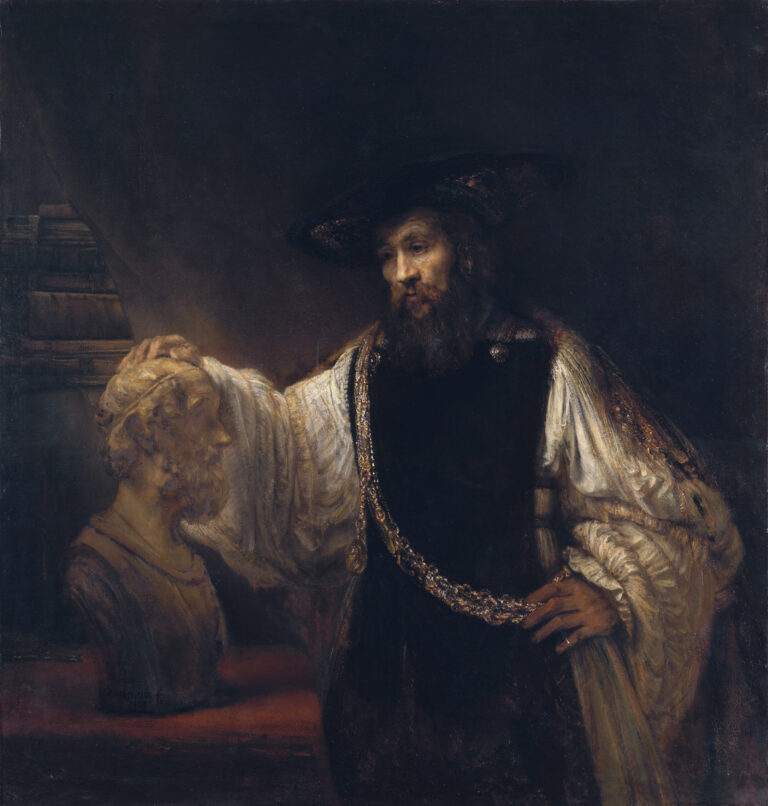
If one adopts Aristotle´s notion of human nature, roughly (rational and social animal) and consider certain attributes as natural (which enable human flourishing) and others as unnatural (which hinder it or are contrary to it), then Macbeth can be a curious example of one who, upon reaching power through bloodshed, knows very well that he does not belong to the position he has attained. His conscience warns him, above all, of how unnatural his reign is, he compares himself to the gracious Duncan, who was cowardly murdered, and Banquo, his best friend, who holds the qualities necessary for a legitimate king, which Macbeth desires and envies. To analyse the dramatic effectiveness of the soliloquy above, we need to know what is happening with Macbeth in this moment of the play. The ambition for the throne cultivated until the third act succumbs to frustration. Far from satisfaction, he finds himself in acute fear. Based on his reaction to Banquo reminding him of the witches’ prophesy which said that Banquo “Should be the root and father of many kings“, we can assume that his maintenance of power is already a dislocated, forced, and meaningless act for him. Right after that, he orders Banquo’s death not because he feels worthy of the throne like Duncan and naturally well-situated as in the Aristotelian notion of Kingship (the adequate rule of one over the many), but because he is like a frightened child. Despite showing remorse for Duncan’s assassination, it is noticeable that this awareness quickly evaporates and gives way to a much greater concern about the consequences of the regicide. Until then, the witches’ prophesy is being fulfilled, and given his friendship, Macbeth knows that Banquo has a more admirable character than his own naturally being the greatest threat to his reign. He fights against the idea of Banquo as king as one fights against a truth.
A good way to understand consciousness is through language. If we examine the text and focus not on the interpretative or intelligible aspect, but on the sensation consequence of the “lexis” and“melos” strictly we are able to have a good apprehension of Macbeth’s state of mind. Let’s list the most striking words: “Nothing, safely, fears, wisdom, guide, dauntless, rebuked, fruitless, barren, rancors, fate, utterance.” The instinctive reaction one has upon hearing “safely” is how it contrasts with the instability of Macbeth’s life. In the case of “Wisdom” with his impulsiveness. “Nothing” and “Fruitless” with the lack of value in the satisfaction that was to come. “Fate” and “Utterance” as the tension toward the resolution of his unnatural role. In the passing: “Our fears in Banquo…Stick deep” The repeated “s” sounds in “fears” and“stick“ with the close consonants create a hissing quality in conformity to Macbeth´s anxiety and secrecy. The hard “k” sound in “stick” and a similar effect in “deep” make the phrase feel almost like a knife piercing flesh. In “Upon my head they plac’d a fruitless crown” the elision in the word “placed” gives to it a plosive sound that is repeated in “put, barren, gripe”in the next sentence: “And put a barren sceptre in my gripe”. The emphatic repetition of “P” (puh) and “B” (buh) causes a muffled effect to the listener not only resembling the noise of objects being placed on a hollow surface, respectively the crown, the sceptre on Macbeth’s head, but also, ironically contrary to what is expected of the noble act of coronation, giving the symbols of nobility a weight instead of a glorification; giving a sense of frustration due to being an interrupted and repeated sound, thus, leveling sensation: that is a high poetic unity for at no point there is a lack of alignment between content and form. Considering: “Mine eternal jewel” and “Given to the common enemy of man“. It is notable that the first verse has a meditative quality, almost like a mantra or a prayer, each word resonates with the other then Shakespeare interrupts that “peace” with the harder consonants in “Given to the common”.
In terms of unity of meaning when comparing, for example, Shakespeare with Milton in his Paradise Lost, we notice that Shakespeare, like Dante, is successful in the natural expression of thought with language, whereas Milton, as T.S. Eliot would point out, has his poetic unity compromised.2 In the passage: “What though the field be lost? All is not lost; the unconquerable will, And study of revenge, immortal hate, And courage never to submit or yield…”3 its poetic force and, so to speak, complete intelligibility, both in understanding and in sensory apprehension depends on the long rhetorical development that follows. While we can assert that there is already a dissociation of sensitivity in Milton, as understanding and apprehension do not seem to be exactly together, in Shakespeare, the poetic unity seems to be achieved before the end of a verse…